Hire candidates who read drawings accurately — before costly mistakes happen on the shop floor.
Years of experience don't guarantee someone can correctly interpret tolerances,
projections, or measurement specifications.
Use our 15-minute, scenario-based test
to see how candidates read technical drawings, apply dimensioning rules, and understand
measurement principles — before you commit to interviews or a hire.
Why Test Technical Drawing?
Misreading a technical drawing can lead to scrapped parts, production delays,
and safety issues. This skill is foundational for anyone working with manufactured
components or engineering documentation.
The problem? Many candidates claim
competence but struggle with tolerances, projections, or caliper readings under
realistic conditions. Heroify helps you verify this early.
Without Testing
What you risk
- Parts manufactured out of spec because drawings were misread
- Production delays from rework and quality rejections
- Safety issues caused by incorrect tolerance interpretation
- Wasted materials and increased costs from avoidable errors
With 
What you gain
- Hires who read drawings correctly the first time
- Fewer production errors and quality rejections
- Faster onboarding for technical roles
- Confidence that your team can work independently with engineering documentation
When to test for Technical Drawing?
Use this test when the role requires:
- Reading and interpreting engineering drawings and blueprints
- Understanding geometric dimensioning and tolerancing (GD&T)
- Taking measurements with calipers, micrometers, or other precision instruments
- Working with orthographic projections and sectional views
- Verifying parts against drawing specifications
- Communicating technical details based on drawing information
Rule of thumb: If "technical drawings," "blueprints," or "precision measurement" appears in your job description, use this test.
Who Should Take This Test?
Technical Drawing skills are critical for any role that involves working with engineering documentation, manufacturing processes, or precision measurement.
CNC Machinists
interpreting drawings to programme and verify machined parts
Quality Inspectors
verifying parts against drawing specifications and tolerances
Mechanical Engineers
creating and reviewing technical documentation for manufacturing
Manufacturing Technicians
setting up production based on engineering drawings
Tool and Die Makers
building precision tooling from detailed specifications
Draughtspeople / CAD Technicians
producing and checking technical drawings for production
Maintenance Engineers
reading drawings to repair and replace components correctly
Apprentices and Junior Technicians
entering technical roles requiring drawing literacy
What Does The Technical Drawing Test Measure?
The Technical Drawing test shows how candidates:
Read and interpret orthographic projections, sections, and auxiliary views
Understand dimensioning conventions, tolerances, and surface finish symbols
Apply measurement principles using calipers and other precision instruments
Identify errors, inconsistencies, or missing information in technical drawings
Our methodology is validated by I/O psychologists and based on decades of research into cognitive assessment. Each question is designed to reveal how candidates think, not just what they know.
How It Works
We don't use abstract theory or memorisation questions.
Our test
presents realistic technical drawing scenarios requiring candidates to read drawings,
interpret dimensions, and make measurement decisions — just like they would on the
job.
-
Takes 10-15 minutes, not half an hour
-
Realistic work-like scenarios
-
Balanced difficulty that actually differentiates candidates
-
Scientifically validated
-
Mobile-friendly, candidates can take it anywhere
-
Benchmarking results against real candidates in similar roles
-
Cheat-resistant signals based on behaviour patterns, e.g. unusual speed or tab-switching
-
Candidates don't feel "examined". They feel challenged — in a good way
A shaft is dimensioned as 25.00 +0.02 / -0.05 mm on the drawing. You measure it with a caliper and get a reading of 24.96 mm. What is the correct conclusion?
Select one answer:
Stop reading scores. Start reading insights that help you decide
Heroify doesn't leave you with a raw score.
You get clear,
AI-interpreted insights explaining how results translate to on-the-job performance.
Generic assessment
Generic: "Scored 78% on Technical Drawing"
Heroify insight
Heroify: "This candidate reads standard projections and dimensions accurately, but may need additional support with complex GD&T symbols and sectional view interpretation."
- Read orthographic projections and sectional views accurately and quickly.
- Interpret tolerances correctly, reducing scrap and rework.
- Use calipers and micrometers confidently to verify part dimensions.
- Spot missing or inconsistent information in drawings before production begins.
- Understand surface finish symbols and their manufacturing implications.
- Communicate clearly with engineers and machinists using drawing references.
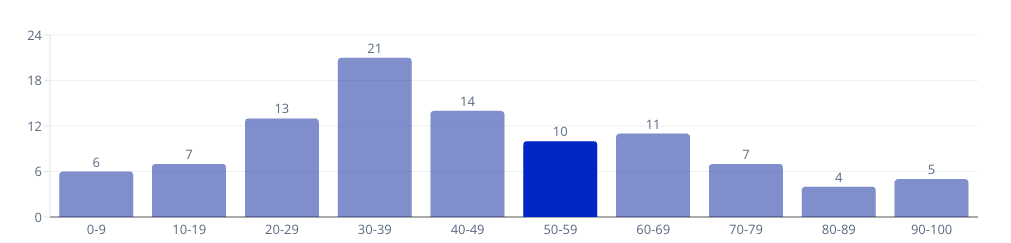
Compare with other candidates
Plus:
-
Specific interview questions to explore deeper, tailored to their results.
-
Comparison dashboard to see all candidates side-by-side
-
Red flags if suspicious behaviour is detected
This lets you:
-
Focus interviews on real strengths and risks—not small talk
-
Compare candidates on thinking quality, not confidence level
-
Spot gaps early and avoid mis-hires
-
Make faster decisions with actual data
96% Positive Feedback From Candidates
Candidates consistently describe Heroify tests as:
"Finally, a test that lets me show what I can do"
"Questions felt like actual job situations"
"Way better than boring personality quizzes"
Every candidate receives instant feedback on strengths and growth areas, so even rejected applicants leave with something valuable — and your employer brand benefits.
GDPR Compliant
Enterprise-grade security
Validated by I/O Psychologists
Science-backed assessments
AI-Enhanced Scoring
Faster, fairer results
Ready to Test Technical Drawing?
Stop guessing. Start using data to identify candidates who can read drawings accurately and work with precision.